Black Sesame Tarts with Ube Custard Filling

Shout out to my friends “Chef Ramsey’s Right Hand Pan,” “All Might,” and “Chickpea” for helping me come up with a title!

Names suggested: tarts de la custard ubé, sesame street tarts, ube custard me me tarts, and ube bae bae.

What’s Ube?

If you’re unfamiliar with ube, it’s a yam that’s purple on the inside but a lot sweeter than your average yam! Some people mistake it for taro, but taro, while also delicious, is not a yam to say the least.

Ube is also known for its rich purple color and while taro can also be purple (or white), it’s a lighter shade than ube. Because of it’s intense purple color, ube-flavored foods like breads or lattes are visually captivating.

For example:

Around 2015 in California, ube sweets were trending in California and prompted many ube-oriented sweets shops to open in LA. Although I live in a suburb of LA, I’ve never had the opportunity to visit one of these stores.

Flash forward five years, and having the time, motivation, and adequate knowledge, I decided to create my own ube treat instead of making the trip to LA (not that I could during the quarantine anyways). I decided on a tart theme.

Initially, I imagined making an ube cheese tart or ube mochi tart. Unfortunately, I didn’t have cream cheese on hand to make a cheese tart and while I was very tempted to make a mochi tart, I wasn’t sure how successful my endeavor would be. Thus, I settled with a custard tart.

No Tart Tin? That’s Okay!

There was one small problem with making tarts ⁠— I didn’t have tart tins so I had to use cupcake tins and a 5-inch cookie cutter. You’ll soon see that it turned out to be hardly a problem at all.

Ended up trading this 3″ cutout shape for a 5″ flower shape to better fit the tin

I cut some parchment paper rounds to line the bottom of the tins, but I found that it would probably be fine without since there’s so much butter in the dough.

Since I wasn’t too confident in making a tart shell, I did a small batch of tart shells first as a trial run though. For the sake of science, here were the ingredients I used:

Trial 1 – Crust was too thick!

  • 5 Tbsp Unsalted Butter
  • 1 Large Egg White
  • 2 Tbsp Sugar
  • 13 Tbsp Flour (or 1/2 Cup + 5 Tbsp)

Crust was too thick at a quarter inch!

The result was a tart that was kind of chewy but also kind of dry. I think it tasted dry because I didn’t roll out the dough as thin as I should’ve. Regardless of the thickness, I felt that this wasn’t the kind of crust that I wanted. I envisioned something more crisp and delicate, not chewy.

After I eating the tarts with the ube custard, I also felt that there was a certain depth missing. I started to think that adding black sesame’s earthy and aromatic flavor profile might help…so I did just that for trial #2.

Added one plain tart (rolled out thinner) for flavor and texture comparison

Except that while I usually have plain black sesame powder on hand, I didn’t this time. I did have instant black sesame powder paste though ⁠— the kind that makes instant black sesame dessert soup. I decided to use it anyways because it claimed that it was low sugar anyways, so I took a chance that it would work.

If you use plain black sesame powder (not for instant dessert soup), try substituting with roughly 6 Tbsp black sesame powder and 1 Tbsp sugar.

Anyways, I modified the first tart recipe as follows:

Trial 2 – Winner!

  • omit sugar since the instant black sesame powder already has sugar
  • add cornstarch for a more delicate pastry
  • use less flour to account for flour needed for dusting
  • roll out the dough thinner (about an eighth of an inch thick)
Blind baking shells: poke holes on the bottom and sides with a fork, line with parchment paper, and top with pie weights (I used dried red beans)

I couldn’t be happier with this trial’s results! The pastry was delicate yet crisp, and the black sesame perfectly complemented the ube custard and brought out a “natural” ube flavor.

On another note, I’m so glad that the ube custard set after baking. It was one of my main concerns going into this project but it turned out alright the first time around so I focused on the tart shells instead.

Ube custard darkens at the top after baking. I also suggest smoothing out the custard before baking (which I didn’t do!)

Without further ado, here are the recipes for the ube custard and black sesame tarts:

Ube Custard

  • Servings: enough to fill 12 tarts
  • Difficulty: easy
  • Print

Ingredients

  • roughly 1 and 1/2 Cups Steamed Ube, mashed
  • 1/2 Cup milk
  • 2 Tbsp condensed milk
  • 1 Tbsp sugar
  • 3 egg yolks

Directions

  1. Combine all the ingredients except the egg yolks in a saucepan. Heat over medium-low heat and stir continuously until the mixture is as smooth as possible. Some small chunks of ube are ok. Turn off the heat and let cool for 10 minutes.
  2. Transfer the mixture to a blender and blend until completely smooth. Transfer back to the saucepan.
  3. Beat the 3 egg yolks together in a small bowl. Add two tablespoons of the ube mixture to the eggs and mix to temper them. Add the tempered egg-ube mixture into the pot.
  4. Whisking continuously over medium-low heat, heat the custard becomes very thick (should be able to hold shape even when it’s hot). Turn off the heat.
  5. Pass the mixture through a sieve and let it cool. Cover the custard with plastic wrap directly touching the custard. Store in the fridge until needed.

Sesame Tart Dough

  • Servings: 7 tarts using cupcake tins
  • Difficulty: easy
  • Print

Ingredients

  • 5 Tbsp Unsalted Butter, room temperature
  • 1 Large Egg White
  • 2/3 Pack Sesame Powder Paste (Torto brand)*
  • 3 Tbsp Cornstarch
  • 1/2 Cup + 1 Tbsp Flour
  • 1 Tbsp Flour mixed with leftover sesame powder (for dusting)

Directions

  1. Combine all the ingredients together in a bowl until it becomes a cohesive ball. Roll out dough between two sheets of plastic wrap until it is around a quarter inch thick.
  2. Chill the dough in the fridge for at least 3 hours. Meanwhile, cut out parchment paper rounds to line the bottoms of the cupcake molds.
  3. Sprinkle a work surface with a bit of flour and sesame powder and roll out the dough to an eight-inch thickness. Dust the top of the dough with flour/sesame as needed to prevent sticking.
  4. Use a 5″ cookie cutter to cut out 7 tarts. Place cutouts into the cupcake molds.
  5. Prick holes at the bottom and sides of the tarts with a fork. Place a small square of parchment paper on top of the the tarts and place pie weights on top. The parchment paper makes it easier to remove pie weights onced baked.
  6. Blind bake the tarts at 375°F for 7 minutes. Rotate the pan halfway through baking to ensure even baking.
  7. Take tarts out of the oven and allow tarts to cool for at least 5 minutes. Remove pie weights and parchment paper squares.

*If you use plain black sesame powder, try substituting with roughly 6 Tbsp black sesame powder and 1 Tbsp sugar.

Black Sesame Tarts with Ube Custard Filling


Ingredients

  • Half of the Ube Custard
  • 7 blind-baked Sesame Tarts

Directions

  1. Fill each tart shell with roughly a tablespoon and a half to 2 tablespoons of ube custard. Smooth out the tops of the custard.
  2. Bake tarts at 350°F for 20 minutes in the middle-rack of the oven or until the tops of the custard forms a skin. Turn off the oven but let the tarts rest inside for an additional 7-10 minutes or until tart crusts brown to your liking.
  3. Cool tarts at room temperature for at least 5 minutes before serving.

Creamy Tomato Soup – Medieval Times Copycat

Have you ever been to Medieval Times? If you haven’t or have never heard of it, it is a dinner theater with live jousting knights while you eat your “medieval” chicken dinner. My parents had taken the family to dine there once when I was a kid and while the knights and castle were cool, my fondest memory of that place was the tomato soup.

Admittedly, I didn’t have tomato soup very often growing up, but I always appreciated the homey aspect of it; as such, it is a soup that is close to my heart regardless. That said, the Medieval Times tomato soup was THE best tomato soup I had ever tasted and that fact holds true even to this day. So, it is no surprise that I had the urge to recreate it.

I ate my soup the way it’s served at Medieval Times- with thick garlic bread!

This particular tomato soup is thick and creamy with small bits of vegetables in it for texture. If I had known that there were onions in this soup as a kid, I probably would’ve refused to drink it, but since the food was served in the dark, I couldn’t tell. In fact, I had thought that the small chunks were ground meat or mushrooms.

The secret to this “meaty,” rich flavor is actually browning or caramelizing the vegetables before pouring in chicken stock.

Carrots, onions, and celery are sautéd with butter and olive oil until browned.

Making this soup actually made me curious about medieval food- how accurate was Medieval Time’s depiction of the real medieval times? My curiosity led me to binge-watch a bunch of YouTube videos on medieval life. While I never found enough information to conclude whether this soup is true to the period, I did learn four medieval “fun” facts:

  1. Lunchtime was the “main” meal of the day and was the heaviest because the activities were limited by the hours of daylight. Dinner was usually something cold and light.
  2. Chicken was one of the most expensive proteins while salmon was one of the cheapest. Because a chicken lays eggs, killing it meant sacrificing a constant protein source. On the other hand, salmon was readily abundant in streams and could be caught freely. As such, a salmon meal was considered a “peasant’s lunch,” while the lords and ladies had fancy chicken.
  3. The browner the bread, the cheaper it was. Lords had white bread on their tables but often didn’t eat it in lieu of all their other foods. The unfinished bread would be given away.
  4. Spice in food was an indicator of class, so if a lord wanted to impress their guests, they would tell the chefs to not be shy with the seasoning. Peasants ate blander food and made do with home-grown herbs.
The brown stuff stuck on the bottom is where all the flavor is. It won’t go wasted in this soup!

How to Store Extra Tomato Paste

For whatever reason, tomato paste comes in a large can even when the majority of recipes only ask for a couple tablespoons … or maybe only one. What do you do with the remaining paste? How should you store it so it’ll last longer? Fortunately, there is a way to store tomato paste so that…

Anywho, after browning the vegetables, flour and tomato paste are added. As it cooks, you’ll start to notice that brown stuff will stick to the bottom of the pan. My mother would freak out if she saw this, believing that it’ll cause cancer and would need to be painfully scrubbed away later. I’m no expert on cancer so I can’t say much about that, but as someone who watches a lot of cooking shows, I can say that this brown stuff is GOOD stuff at least to the palate. All the flavor is collected there.

When the broth is added, I scrape away the bottom bits and combine it into the soup so that it absorbs all the flavor. Scraping it also means that the pan won’t need to be scrubbed contrary to my mom’s expectations. You’ll also find that the bottom bits come off easily- no workout here.

Season with “Italian Seasoning,” then salt and pepper to taste.

After the soup had been boiled, simmered, and cooled to a reasonable temperature to be handled, I blend roughly half of the soup in my trusty blender, no more than 2 cups at a time. I don’t own an immersion blender, but if you do, lucky you- I’m sure this step would be much more efficient!

The original Medieval Times soup was creamy with some bits of vegetables in it which is why I only blend half the soup, but if you’d prefer to have an entirely creamy soup with zero chunks, blend the whole soup. Alternatively, if you’re not a fan of creamy soup, don’t put it through a blender at all. I’m sure both variations would still taste great because this is a great soup!

As for fellow vegetarians and vegans, feel free to swap butter and chicken stock with substitutes and let me know how it goes. I hope you all enjoy this soup as much as my family and I did ❤

Creamy Tomato Soup

  • Servings: 6
  • Difficulty: easy
  • Print

🌱 Make this soup vegan by using vegan butter and vegetable stock.

Ingredients

  • 1/2 Cup Carrots, diced
  • 1/2 Cup Celery, diced
  • 1/2 Cup Onion, diced
  • 2 Tbsp Butter
  • 2 Tbsp Olive Oil
  • 1/2 Tbsp Garlic, minced
  • 3 Tbsp Tomato Paste
  • 3 Tbsp All-Purpose Flour
  • 29 oz Chicken Broth (2, 14.5 oz cans)
  • 14.5 oz can Diced Tomato
  • 2 tsp Italian Seasoning
  • Salt and Pepper, to taste

Directions

  1. Saute diced vegetables with butter and oil over medium-high heat, stirring constantly until vegetables start to brown (about 12-15 minutes). Turn the heat down to medium and add minced garlic.
  2. Add flour and stir to coat vegetables. Once coated, make a well in the center of the vegetables and add the tomato paste. Keep stirring the paste in the middle of the pan over medium heat until it begins to latch onto the vegetables. Combine all the vegetables with the paste and cook until the bottom of the pan develops a brownish crust.
  3. Add one can (14.5 oz) of chicken broth to the pan. Try to scrape off as much crust on the bottom as possible while combining the vegetables with the broth. Once most of the lumps have dissolved, add the rest of the chicken broth, diced tomatoes, Italian seasoning, salt, and pepper.
  4. Bring soup to a boil over medium-high heat. Once boiling, put a lid on the pan and simmer on medium-low heat for 15 minutes.
  5. Let soup cool down to at least a warm temperature before blending. Use a blender or an immersion blender to puree half of the soup. If using a blender, be careful to not load more than half your blender capacity. Combine the puree with the rest of the soup.
  6. If serving immediately, heat soup back up and serve.

  • The amount of salt needed will depend on the salt levels of the chicken broth you’re using. If you’re unsure of how much salt to use, try adding half a teaspoon at a time, taste-testing between each half.
  • If you’d like a completely creamy soup with no chunks, feel free to puree the entire soup! Alternatively, you can choose not to puree the soup at all.
  • Serve with a dollop of sour cream and garlic bread or grilled cheese 😋

Kale and Potato Hash (Updated)

Do you ever just have leftover kale…maybe from making Kale and Butternut Squash Orecchiette?

Shameless plug aside, I’m honestly not the biggest fan of kale. I know that my previous statement is contradictory since I now have two published recipes with kale as a main ingredient- but, you have to admit that when kale is stir-fried with garlic and other veggies, it transforms into savory goodness. If you’ve yet to experience the formidable flavor pairing that is kale and garlic, I commend you to try out this recipe!

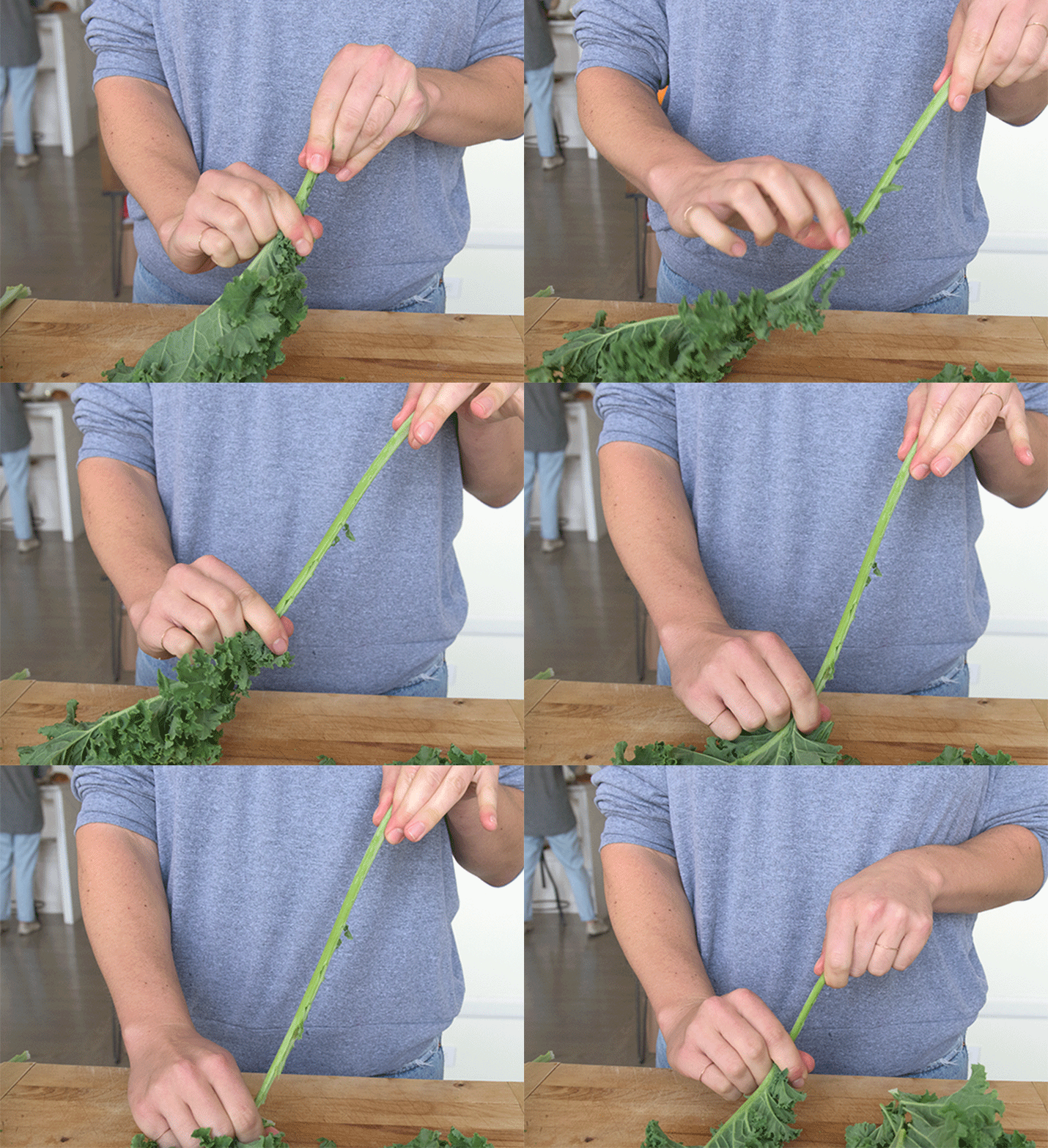
I think that the key to making kale appetizing is to de-stem it. I once bought bagged kale on accident and was appalled to find that kale from the bag came with their stems on. Some people do eat kale with the stems, but I can’t seem to bring myself to enjoy the stem part even after pan-frying it with heaps of garlic.

Since finding ways to make kale taste good, kale has become a staple in my fridge. I’m also glad that it’s a pretty cheap vegetable at 99¢a bunch during the spring and summer. Somehow, its presence in the fridge is also a reminder to feed my body healthier food.

Be sure to thoroughly wash and de-stem your kale leaves. You can either use a knife to cut around the stem, or slide the leafy part off like so:

I love this breakfast idea because it’s hearty and healthy. So, if I have time and leftover kale, chances are, I’ll be making this for brunch. Plus, it’s a breakfast idea that doesn’t have spinach for once. Nothing against spinach, but variety is very welcome in my kitchen. Then again, if you would like to substitute kale for spinach, go for it. Speaking of substitutions, sweet potato hash instead of potato would also be yummy too.

Rinse off the starches for a crispier hash.

Whatever your choice of starch, be sure to rinse the chopped cubes in a bowl of water a couple times to remove the starch on the outside. Then, pat dry the cubes as much as possible. Removing the starch and drying them will help the cubes fry up faster and more evenly.

After cooking, I recommend serving it in a big bowl fit for a hearty meal. I love my breakfasts in bowls because it makes it easy to consume by the spoonful- real classy, I know- but such a simple thing makes me feel so free and happy. So, I’m going to recommend that you serve this in a bowl too. Thank me later.

Feeling something sweet instead? Try this:

Kale and Potato Hash

  • Servings: 2 bowls
  • Difficulty: easy
  • Print

Ingredients

  • 3-4 Kale Leaves, de-stemmed and cut into 1″ pieces
  • 1 large Russet Potato, cubed, rinsed, and dried
  • 2 Garlic Cloves, minced
  • 1 tsp Cayenne Pepper
  • 2 Eggs
  • 2 Tbsp Vegetable Oil
  • 1/4 Cup Water
  • Salt and Pepper to taste

Directions

  1. In a large skillet, infuse the garlic in vegetable oil by heating together over medium-low heat until fragrant.
  2. Add the potatoes, and crank up the heat up to medium-high. Let the potatoes sit untouched until the bottom begins to crisp and brown, about 3 minutes. Flip the potatoes and allow the other sides to crisp and brown as well until all sides are nicely browned.
  3. Add kale, cayenne pepper, salt and pepper, and water. Put a lid over the pan and let everything cook for about 5 minutes or until kale is cooked.
  4. In a small frying pan, make sunny-side up eggs to top the hash with.
  5. After cooking the hash for 5 minutes, open the lid and continue to cook to evaporate any excess water.
  6. Serve hash in a bowl and top with a sunny-side up egg.

  • Substitute kale with spinach and/or potato with sweet potato.
  • Make scrambled eggs instead of a sunny-side up egg and mix it into the hash.
  • When eating the hash with a sunny-side up egg, break the yolk and mix it with the hash for a creamy texture.

While I was writing this updated recipe and looking over the old version, I got a bit emotional at the note I had written at the bottom of the old recipe.

I initially published this recipe on March 17, 2019, almost a complete year ago. I had written that I was proud of how far I had come since the thought of making a cooking blog back in November 2017. Now, in February 2020, I’m in disbelief that blogging has been with me for this long, granted I wasn’t regularly updating until January 2019 when I moved the blog here on WordPress. Regardless, I am still proud of myself for sticking with this blogging thing.

In the old post, I also wrote about starting an Instagram account. Not to keep tooting my own horn, but yeah, I did that and I’m doing pretty good!

Once again, I am so thankful for my friends, family, and other online supporters that continue to motivate me to keep going!

Original note left at the end of the old recipe post

As always, let me know if you’ve tried out this recipe! I’d love to know how it goes.

Soft Snickerdoodle Cookies (Updated)

These are by far the softest and fluffiest cookies I have ever had. Ever. And so, like any amazing recipe, I had to share it and make sure it never disappears. The original recipe is from Mrs. Sigg’s.

The trick to these cookies is to make them by hand because it is easier to overwork the dough using electronic machines, thus, ruining the texture of the cookie. However, if you must break out the hand-mixer or stand-mixer, be sure to be wary about overworking the dough. Stop mixing immediately once the ingredients are homogeneous.

The perfect homemade treat with some tea.

I use an ice cream scoop to make the cookie sizes relatively even, but if you have a cookie scoop, that’s even better!

Since these cookies are really soft, it’s important to let the cookies rest after baking. Although it’s hard to resist oven-fresh cookies, these cookies will be too soft to handle fresh. Letting them cool will help the cookies harden slightly.

The total cost of a whole tray of medium-sized cookies for me was roughly $2.95.

Want something chocolate-y instead?

Fudgy Brownies (Updated)

Crispy top and melt-in-your-mouth interior…what other reason do you need to make these brownies?

Soft Snickerdoodle Cookies

  • Servings: 12, 3-inch cookies
  • Difficulty: easy
  • Print

Credit:  Mrs. Sigg’s. It’s very important to use room temperature unsalted butter in this recipe.

Ingredients

  • 8 Tbsp Unsalted Butter, at room temperature
  • 3/4 C. Sugar
  • 1 tsp Vanilla Extract
  • 1 Tbsp Cinnamon
  • 1 Large Egg, beaten
  • Roughly 1+1/3 Cup of Flour
  • 3 tsp Baking Powder
  • Cinnamon Sugar (3 Tbsp Cinnamon + 3 Tbsp Sugar)
  • Cooking Spray

Directions

  1. Whip butter until creamy. Add sugar, cinnamon, and vanilla. Mix until ingredients are all combined.
  2. Add in the beaten egg, and mix until combined.
  3. In a separate bowl, sift the flour and baking powder together. After sifting, add the dry ingredients into the wet ingredients. Fold wet and dry ingredients together with a rubber spatula until just combined.
  4. Preheat the oven to 400 degrees Fahrenheit. Line a cookie tray with parchment paper and grease with cooking spray.
  5. Use an ice cream scoop to portion the cookie dough into about 12 cookies.  With our hands, shape portions into balls.
  6. Coat the surface of the ball in cinnamon sugar by rolling the ball in a small bowl with cinnamon sugar. Place the coated dough balls onto the tray, allowing at least an inch of space around each cookie.
  7. Bake in the oven for 8 minutes or until edges start to brown. Allow cookies to rest at room temperature for at least 10 minutes before serving.

Warm up cookies older than a day by baking at 350°F for about 4 minutes.


Big thanks to my roommate who actually tests out my recipes. There are a lot of components of a recipe’s success that I am ignorant of until she lets me know. It is only because of this that I am able to edit and improve my recipes so I am incredibly grateful.

In the older version of this recipe, I was open about the fact that I had used salted butter with success for this recipe. It didn’t occur to me that I should’ve included a word of caution about selecting fats for cookies.

Generally speaking, I find that for cookie recipes, it is mandatory to use unsalted butter if that’s what it calls for. In desperate times, I have used salted butter before; however, I do not recommend it if it can be helped. It may seem obvious, but the salt in salted butter can mess up a cookie’s texture because salt produces moisture in the cookie dough when it bakes. It’s not an extreme difference though, which is why I was able to get away with it in this case. The consequences of substituting salted butter in more delicate cookie recipes could be way worse though.

It should be noted that some recipes call for salt even if unsalted butter is being used but this still doesn’t mean that using salted butter is okay. The salt added with unsalted butter is miles less than the amount in salted butter. That said, in my case where I used salted butter desperately, I would’ve skipped any additions of salt the recipe called for to minimize damage.

Other evil substitutions for unsalted butter include margarine, stick-version of vegetable oil, and liquid oils. Not only do these fats secrete unwanted moisture, but they also have a different melting temperature than what is desired in unsalted butter.

Good luck in the kitchen, and please do let me know your results if you try out any of my recipes!! ❤👩‍🍳

Sweet Potato / Ube Latte

A couple of years ago, I heard that sweet potato lattes were popular in Korea. While making a drink out of potatoes may seem strange, I think it’s one of those uncalled for inventions that no one knew they needed until it existed. It’s the perfect drink during the colder months– because the latte base is sweet potato, the latte is thicker than other flavored lattes, say, a green tea latte, which means that this drink fills you up and retains its heat much better. Additionally, since sweet potatoes are sweet by themselves, you don’t have to add much sugar to the drink, making it a relatively healthy treat!

Another “healthy” treat:

Avocado Smoothie

Avocados contain four grams of protein, making them the fruit with the highest protein content!

That said, I chose to use purple sweet potato (aka ube) this time instead of regular sweet potato. Since the purple coloring is pretty, I also decided to try to do a layered effect and make it a bit fancier than the normal sweet potato latte.

I’d imagine that any other sweet potato variety would also work for this, but keep in mind that the sugar levels differ depending on the type of potato, so adjust the recipe as needed.

Since I’m doing a layered effect, I separated the latte into three parts with the densest layer on the bottom: paste, milk, and whipped cream respectively.

If you want to re-create this recipe normally and don’t care for appearance, go ahead and blend the paste and all the milk together. This is what I usually do with normal sweet potato latte.

Unfortunately, I would also like to be able to have pretty milk foam floating at the top, but I haven’t found a successful way to froth milk without a milk-frother yet. If you know how to froth milk, by all means, do it!

3-Layer Ube Latte

  • Servings: 1 cup
  • Difficulty: easy
  • Print


Use whatever milk you prefer.

Ingredients

  • 1 small Purple Sweet Potato, steamed and peeled
  • 1 Cup hot Almond Milk
  • 2 Tbsp Condensed Milk
  • Whipped Cream for topping
  • Chopped Walnuts for topping (optional)

Directions

  1. In a blender, combine the small purple sweet potato, 1/4 Cup of almond milk, and 2 Tbsp condensed milk. Blend until smooth. Strain mixture if needed. Pour mixture into the bottom of a mug.
  2. Slowly and carefully add hot milk on top of the sweet potato paste.
  3. Top with whipped cream and walnuts, if desired.

Sweet Potato Latte

  • Servings: 1 cup
  • Difficulty: easy
  • Print


Use whatever milk you prefer.

Ingredients

  • 1 small Sweet Potato, steamed and peeled
  • 1 Cup hot Almond Milk
  • 2 Tbsp Condensed Milk
  • 4 Walnut Halves, chopped
  • Whipped Cream (optional)

Directions

  1. In a blender, combine the sweet potato, 1 Cup of almond milk, 2 Tbsp condensed milk, and 4 walnut halves. Blend until smooth. Strain mixture if needed.
  2. Pour mixture into a mug. Top with whipped cream and more walnuts, if desired.

By the way, I got my pretty glass mug from Ikea! 😊

Orange Soufflé (Updated)

Soufflés are often expensive when they’re sold in restaurants or cafés, and the media makes them seem like a challenge to make! In reality, it’s fairly easy once you know what you’re up against.  The soufflé is one of my favorite desserts to eat and make and I’ve made them countless times, especially around Christmas. 

I totally stole this recipe from Chef John. It is an incredibly versatile recipe that I’ve abused countless times in my baking experiments. Therefore, I am positive that it is near impossible to mess up this recipe, so don’t be intimidated by this recipe!

The only modifications I have made from the original recipe is substituting Grand Mariner with orange juice. I did this because I did not have any Grand Mariner on hand the first time I made this (I was still a minor).

But because it’s made with orange juice, it’s a perfect excuse to eat soufflés for breakfast. Life is short, enjoy it to its fullest.

Sugar for breakfast please!

For three soufflés straight out of the hot oven, it only costs 96¢ (excluding optional ingredients and orange juice)!  Restaurants can charge upwards $9 for one!

Recipe Pointers:

Make sure you throughly cover the sides and bottom of the ramekins in sugar. Doing this will help the batter have something to grab onto as it rises. In other words, it helps the souffle rise straight up.

The rising agent in soufflés are whipped egg whites, or meringue. Making a meringue should be simple and easy in theory, but it is equally easy to screw up badly even before you start.  Head over to this page for some pointer tips! In Chef John’s recipe, he says to stop whipping when the consistency is like shaving cream (before stiff-peak stage aka meringue).  I have tested this, and yes, the souffle still comes out beautifully.  I have also accidentally whipped it fully into the stiff-peak stage and still had successful soufflés.

By the way, recipes always tell people to preheat the oven in the very beginning, but I never do this because I feel like I’m wasting energy. I don’t preheat the oven until minutes before I need it. If you prefer to heat the oven from the beginning, go ahead, but just note that I don’t write out this step in “Prep”. That said, let’s get baking, shall we?

Orange Soufflé

  • Servings: 3, 8-ounce ramekins
  • Difficulty: easy
  • Print
This is a non-alcoholic version of Chef John’s Grand Mariner Soufflé recipe.

Ingredients

Prep:

  • 1 tbsp room temperature butter
  • 1 1/2 tbsp white sugar

Batter:

  • 1 1/2 tbsp unsalted butter
  • 5 tsp all-purpose flour
  • 4 tbsp cold milk
  • 3 large eggs
  • 1 tbsp orange zest, grated
  • 2 tbsp orange juice
  • 1/2 tsp vanilla extract (optional)
  • 4 tbsp white sugar
  • 1/4 tsp cream of tartar (optional)
  • Powdered sugar for garnish (optional)

Directions

Prep:

  1. Wash and dry 3, 8-ounce ramekins.Throughly grease the bottoms and sides with some room-temp butter.
  2. Coat the sides and bottom of the ramekin with sugar. The butter should allow the sugar to stick easily. Dump the excess sugar into the next ramekin and repeat until all ramekins are coated.

Making the batter:

  1. In a saucepan, melt 1 1/2 tbsp of butter over medium-low heat.
  2. Stir in 5 teaspoons of flour. Keep stirring the mixture until fragrant and turns a light golden color (about 2-3 minutes).
  3. Lower the heat and add milk slowly.
  4. Return the heat to medium-low and stir the mixture until it becomes a smooth, thick paste that doesn’t stick to the sides of the pan. Turn off the heat.
  5. Transfer the mixture to a mixing bowl. Add orange zest, orange juice, vanilla, egg yolks, and mix until homogeneous. Set aside.
  6. Make a meringue. Whip the egg whites until frothy. Add in cream of tartar if you have some. Continue whipping and gradually add in 4 tbsp of sugar. Stop whipping once egg white reaches a “shaving cream” consistency.
  7. Preheat the oven to 400°F.
  8. Combine a quarter of meringue into the batter mixture to lighten it. Gently fold the rest of the batter into the meringue.
  9. Distribute the batter among the 3 ramekins and bake for 15 minutes or until lightly brown and risen.

Garnish: If you plan to garnish it with powdered sugar, have that ready near the table it will be served. Take about a tablespoon of powdered sugar and sift it onto the soufflé.


Keep a close eye on the soufflés after 12 minutes because you want to catch them when they’re nicely golden. Remember, soufflés deflate VERY quickly after taking it out of the oven even with all precautions.

On a random note, I started baking because I have a sweets-tooth and I fell in love with sweets even more after watching baking animes like Yumeiro Patissiere. I mean, animes make food look like literal magic. And thus, being further encouraged by anime, I took it upon myself to teach little ol’ me how to make various sweets.

Why did you start baking or cooking? I’d like to know in the comments 😊